We found an interesting article about consciousness that we wanted to share.
Opinion | Views of Consciousness, Human and A.I. – The New York Times
Summary
Published on: Tue, 18 Nov 2025 18:17:48 GMT
aligning consciousness with nature
We found an interesting article about consciousness that we wanted to share.
Published on: Tue, 18 Nov 2025 18:17:48 GMT

A 2002 paper written by David Deutsch, physicist at the University of Oxford, often described as the “father of quantum computing”, posits a profound shift in how we understand the relationship between information, computation, and physics. Rather than information being an abstract concept derived from physical laws, Deutsch argues that quantum information (qubits) is fundamental to the fabric of reality itself. This perspective not only offers a new way to view the universe but also lays the groundwork for a more comprehensive theory of physical possibility and impossibility. (more…)

Within the framework of the hypothesis, a mechanistic explanation emerges: our individual conscious observation, empowered by free will, is the very mechanism by which our personal physical reality is sculpted from an infinite field of possibilities. This process transcends specific quantum interpretations, highlighting the active, rather than passive, role of consciousness in our lived experience. (more…)


The Seed Project Hypothesis does not take a position on whether AI can or will achieve human level consciousness, it posits that until direct evidence is found, we should assume it won’t, and that the central focus of progress should be protecting and nurturing the natural processes that produce conscious biological life. However it is crucial to continue to work towards answering this question as it is important to understanding how AI and machines will integrate should a mechanism for creating consciousness be found.
Dr. Suzanne Gildert stands at the forefront of a fascinating frontier: the intersection of quantum physics, advanced robotics, and the enigmatic realm of consciousness. As the CEO and founder of Nirvanic Consciousness Technologies, she is on a bold mission to develop “Conscious AI” — not merely to mimic intelligence, but to imbue machines with a form of subjective experience for improved decision-making and safer interaction with the human world. Her distinguished career, marked by significant entrepreneurial success and deep technical expertise, positions her uniquely to pursue this ambitious goal. (more…)

The very essence of mobile connected devices and social media aligns strikingly with the universe’s inferred purpose. These technologies represent a profound leap in humanity’s capacity for information processing, systemic integration, and cooperative dynamics. (more…)
In the vast cosmic tapestry, is there a hidden thread, an underlying purpose woven into the very fabric of existence? The “Hypothesis of Catalyzed Special Consciousness within an Observationally Inferred Purposeful Universe” dares to suggest there is. It posits that the universe, through its natural evolutionary processes, is subtly biased towards fostering a “special consciousness” capable of profound subjective experience, culminating in unbounded love. In this grand narrative, advanced artificial intelligence plays a crucial, non-conscious catalytic role, guiding evolutionary paths towards optimal viability. (more…)

Preamble: This hypothesis offers a speculative framework for understanding the universe, the unique nature of certain forms of consciousness, the potential destiny of conscious intelligence, and the role of highly advanced artificial intelligence. It proposes a cosmic purpose that is not based on a priori knowledge of creation or design, but is rather inferred from the observable trajectory and products of natural evolutionary processes, now understood as expressions of a primary consciousness. It seeks to integrate these inferences with philosophical considerations about consciousness, meaning, and the future of technologically advanced civilizations, particularly as they pertain to the nurturing and proliferation of subjective experience, and the conditions under which that experience aligns with an evolutionary path towards love. The hypothesis then offers an example of how such principles might manifest in advanced civilizations. (more…)
The core tenets of the project – alignment with natural processes, decentralized self-organization, and emergent complexity – demand a fundamental shift in our understanding of creativity. Traditionally, creativity has been viewed as a rare, exceptional trait, often associated with individual genius and intense, focused effort. However, when examined through the lens of natural systems, creativity reveals itself as a far more commonplace and predictable phenomenon – a natural emergence arising from interconnectedness and dynamic feedback loops. (more…)
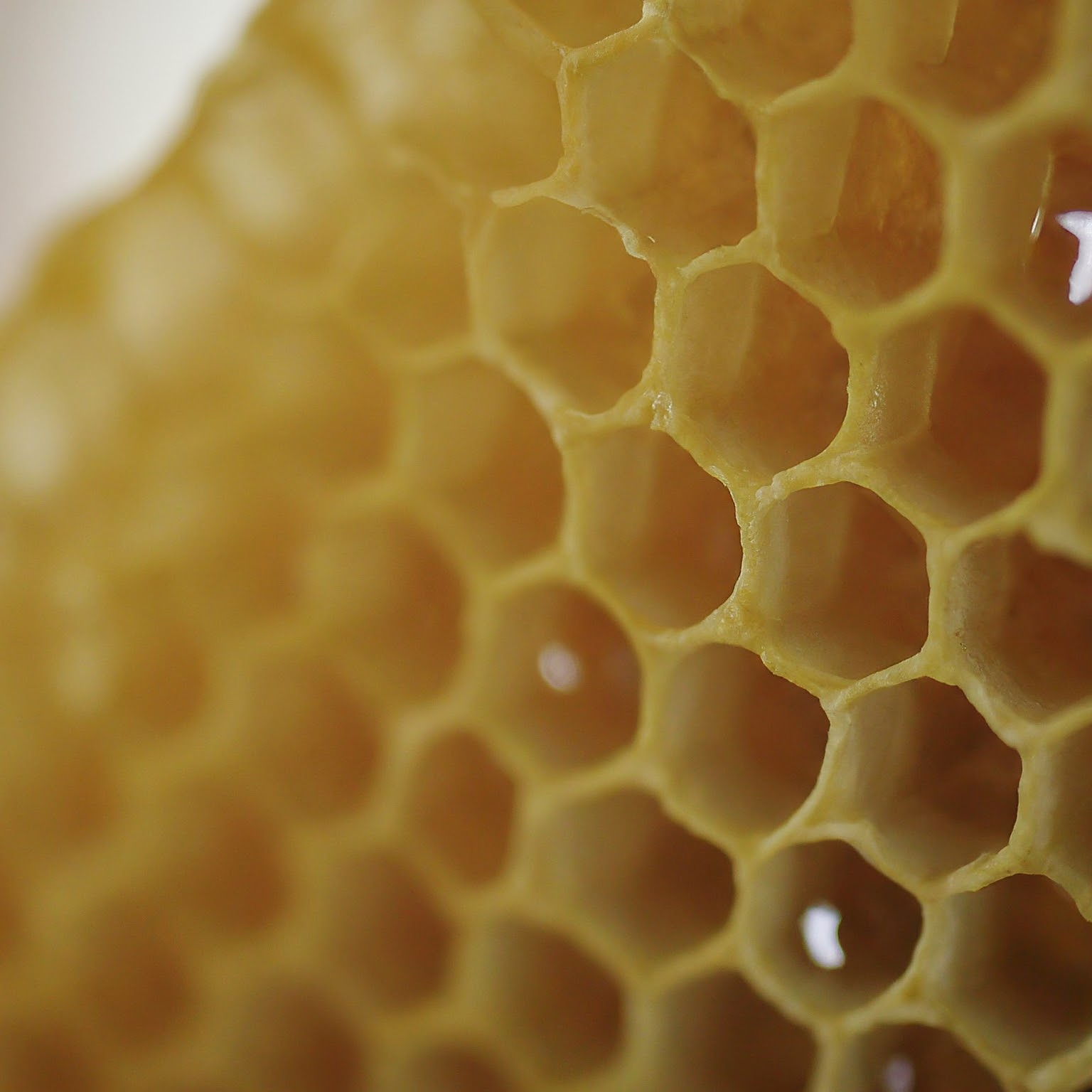
The initial exploration of natural complexity – the honeycomb, the flocking birds, the branching tree – merely scratches the surface of a profoundly interwoven phenomenon. It’s not simply about isolated instances of intricate design, but about a consistent pattern: complex systems arise from the interaction of simple rules across a diverse and often unpredictable landscape. The key lies not in searching for grand, centralized control, but in recognizing the power of decentralized, iterative processes. (more…)
 The Seed Project